
Germany’s drive to expand its high-voltage transmission network is accelerating the adoption of semi-automated construction systems, as contractors deploy increasingly digitalised drilling equipment to build critical energy infrastructure with reduced surface disruption.
At the centre of the latest deployment is the A-Nord high-voltage direct current (HVDC) link, a 300-kilometre underground cable project designed to transport up to 2,000 megawatts of wind power from northern Germany to industrial centres in the west. When completed, it is expected to supply electricity equivalent to “around two million people”, with commissioning planned for 2027.
Rather than relying solely on conventional open-cut excavation, sections of the route are being installed using horizontal directional drilling (HDD), a trenchless construction method that is increasingly being enhanced with automation, sensor integration, and digital workflow control.
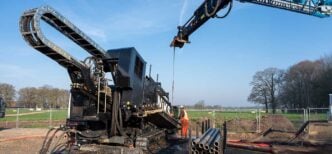
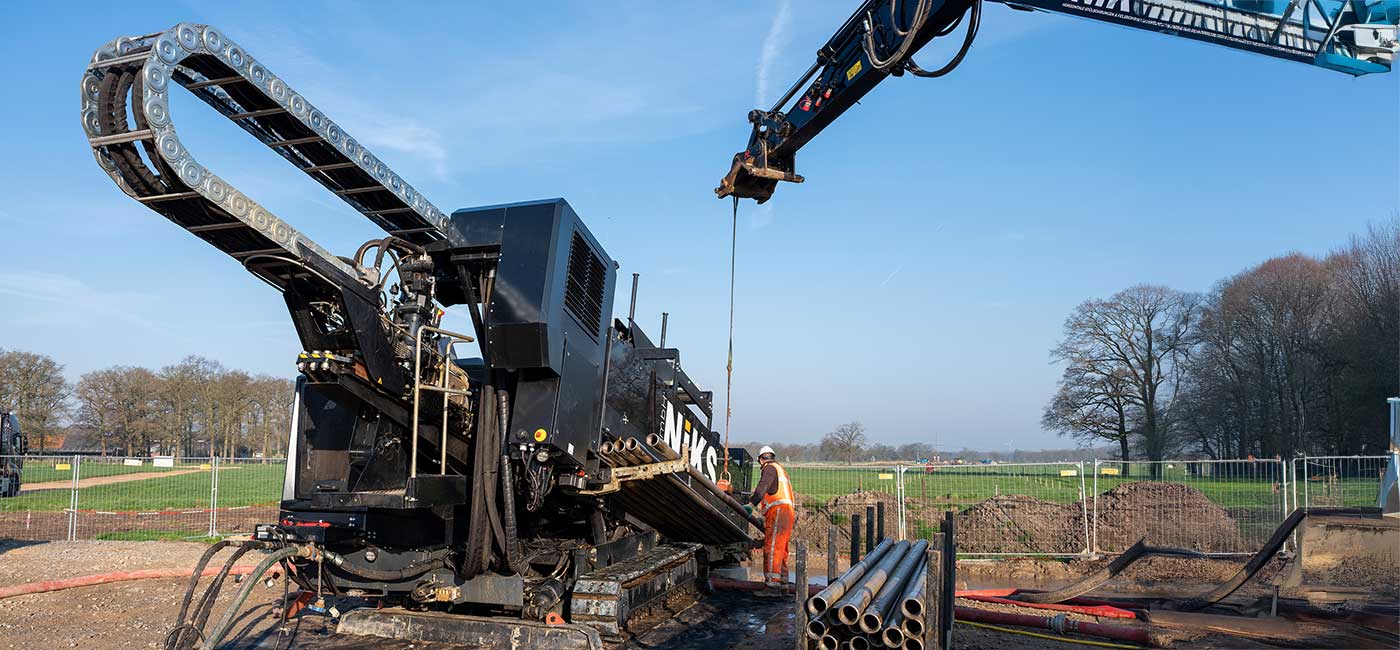
On a section in Geldern, contractors Niks Infra B.V. used a HDD system supplied by TRACTO to install multiple long-distance boreholes beneath environmentally sensitive terrain, including waterways within a nature reserve.
The equipment used reflects a broader shift towards what industry participants describe as digitally assisted, repeatable construction processes. The drilling rig is equipped with automated data logging and integrated guidance systems that continuously track drill head position during pilot drilling.
According to Niks Infra, “the reduced number of rod joints compared to 3-metre rods, combined with a handling system in full-auto mode, enables faster drilling operations.”
Operators control the system via a central human–machine interface, with drilling parameters and positional data displayed in real time. The aim is to combine machine assistance with operator oversight to improve consistency and reduce execution risk across repeated bore operations.
In Geldern, six pilot bores of approximately 490 metres were completed in an average of around seven hours each, followed by reaming, bore cleaning and pipe installation in sequential stages.
The contractor said that “automatic drilling data recording… simplifies precise documentation, which is a particular advantage for complex infrastructure projects with stringent documentation requirements.”
While operators remain in control of the drilling process, the system is designed to reduce manual variability and improve repeatability across long infrastructure corridors.
Grid operator Amprion, which is developing the A-Nord project, is increasingly relying on trenchless construction methods as it builds out Germany’s offshore wind integration network. The line forms part of a wider corridor strategy linking offshore generation in the North Sea to inland demand centres.
In environmentally sensitive areas, HDD is often the only viable method. As the project description notes, trenchless construction “significantly reduces large-scale disruption to valuable land such as meadows and fields… and avoids the need for large volumes of excavated soil for cable trenches.”
It adds that, in contrast to open-cut construction, trenchless methods require only limited site access and launch pits, reducing restoration requirements and lowering emissions from heavy machinery.
Amprion has also deployed trenchless techniques across related offshore grid connections such as DolWin4 and BorWin4, including undersea and island crossings where conventional excavation would be impractical.
The contractor says that the system’s automation features support “faster drilling, predictable workflows and the cost-effective implementation of challenging infrastructure projects.”
However, the technology remains firmly in the category of operator-supervised automation rather than autonomous robotics. Human judgement is still required for steering, pressure control and decision-making in complex subsurface conditions.